
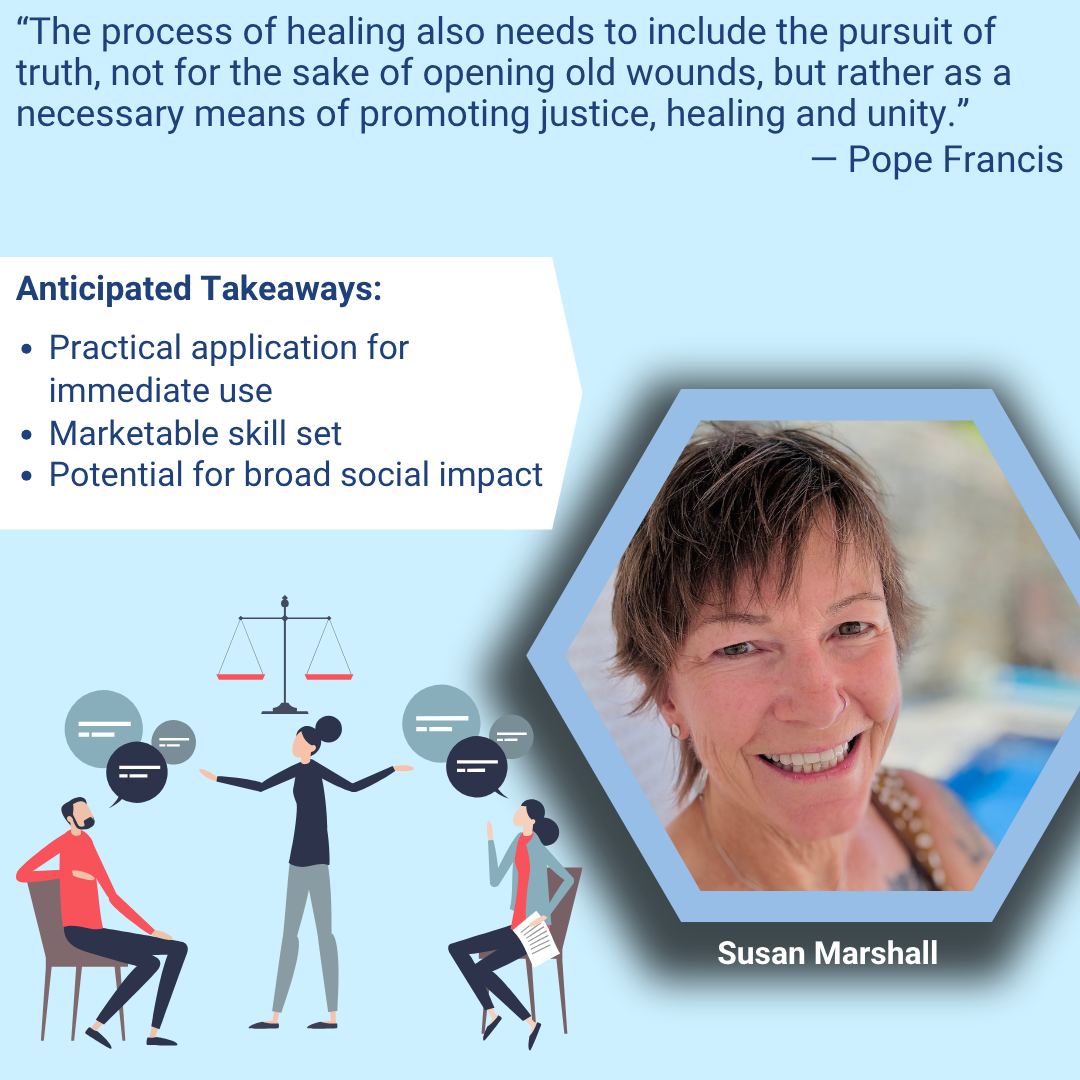
In today's rapidly evolving higher education landscape, fostering a culture of inclusivity, civil discourse, and collaboration is more important than ever in our heterogenous labs, studios, and other research spaces. Restorative Practices (RP) offer a transformative approach to building strong relationships, resolving conflicts, and promoting a sense of belonging within research groups. For a truly restorative culture, labs/departments, etc. need practical strategies for immediate application that help everyone feel valued, heard, and empowered, especially when differences of opinion threaten to stall progress. Implementing RP can not only enhance communication and teamwork, it cultivates a sense of community that transcends physical boundaries for postdocs, faculty, and the graduate students they mentor.
You're also encouraged to register for Part 2 the next day.
Restorative Practices Training for Postdocs and Faculty/Staff Mentors of Postdocs:
Introduction to Restorative Practices: Philosophy & Framework (morning session). This first part of the training explores the fundamental principles, philosophy, theories, practices, models, and skills of restorative practices. We will explore the emotional, relational, and ecological theories underpinning restorative principles, and the importance of engaging with others in equity-oriented and trauma-informed relationships. Participants will develop explicit restorative practices language for application in their own personal and professional lives.
Using Circles: Building Community & Informal Restoration Practices (afternoon session). In this training, special emphasis is placed on proactive circles (to build community) and responsive circles (to respond to harm) and the informal application of these processes will be explored. Participants will be given the opportunity to practice planning circles and will discuss how to use circles for many purposes, including how to respond in the moment to incidents in their communities. Issues critical to the development of restorative practices, such as models of human interaction and community building will be explored. Participants will also assess the role of human emotion, especially shame, in social relationships.
A meal will be included (yes, coffee too!).
About the Trainer:
Since 2016, Susan has served as a Restorative Practices Facilitator and Trainer under the guidance of the International Institute of Restorative Practices (IIRP). In addition to this role, she has been a board member and volunteer conferencing facilitator with the local non-profit Centre County Community Conferencing since its inception in 2020.
With extensive experience in Restorative Practices and Restorative Conferencing, Susan has dedicated countless hours to training others. She has facilitated conversations focused on building community, repairing harm, and restoring relationships across the State College Area School District, Penn State, and the wider Central Pennsylvania region. Before launching her own business, Susan spent 34 years as a school counselor, including seven years as the head school counselor at State College Area High School, where she introduced restorative practices throughout the district.
About Your Hosts:
The program is a partnership between the Office of Postdoctoral Affairs and the Office of Faculty Affairs, underscoring our commitment to mentoring and the added value of restorative practice as a complementary framework.
This training will be capped at 40 participants.